
From Chaos to Coherence: Entanglement and Narrative Stability
PART 3 of 7
Introduction :** **By now, we've explored how language models operate probabilistically, how they are sort of collapsing a sea of possibilities into each token or pixel. But how does something feel coherent? Why do some AI-generated stories, summaries, or images just "click," while others feel disjointed or hollow?
In Part 3 of our Quantum-Inspired AI Dynamics series, we’ll explore the concept of **entanglement **(exciting!) how each token or pixel isn’t just an isolated decision but part of a broader network of relational constraints. This is how we can come to understand that these models are forming narrative around a type of gravity.

Coherence as Emergent Entanglement
In quantum mechanics, entanglement means that the state of one particle is inherently tied to the state of another, no matter the distance. The information is shared—co-dependently—across the system.
Similarly, when a language model is generating a sentence, the meaning of each word is not formed in isolation. It's shaped by, and helps shape, the words that come before and after. These relationships act like strands of entanglement—binding the generated text into a coherent whole.
The more meaningful the structure, the stronger the entanglement. The more entangled, the more likely the reader (or user) will perceive the output as intelligent, stable, or truthful.
Tokens That Echo Back
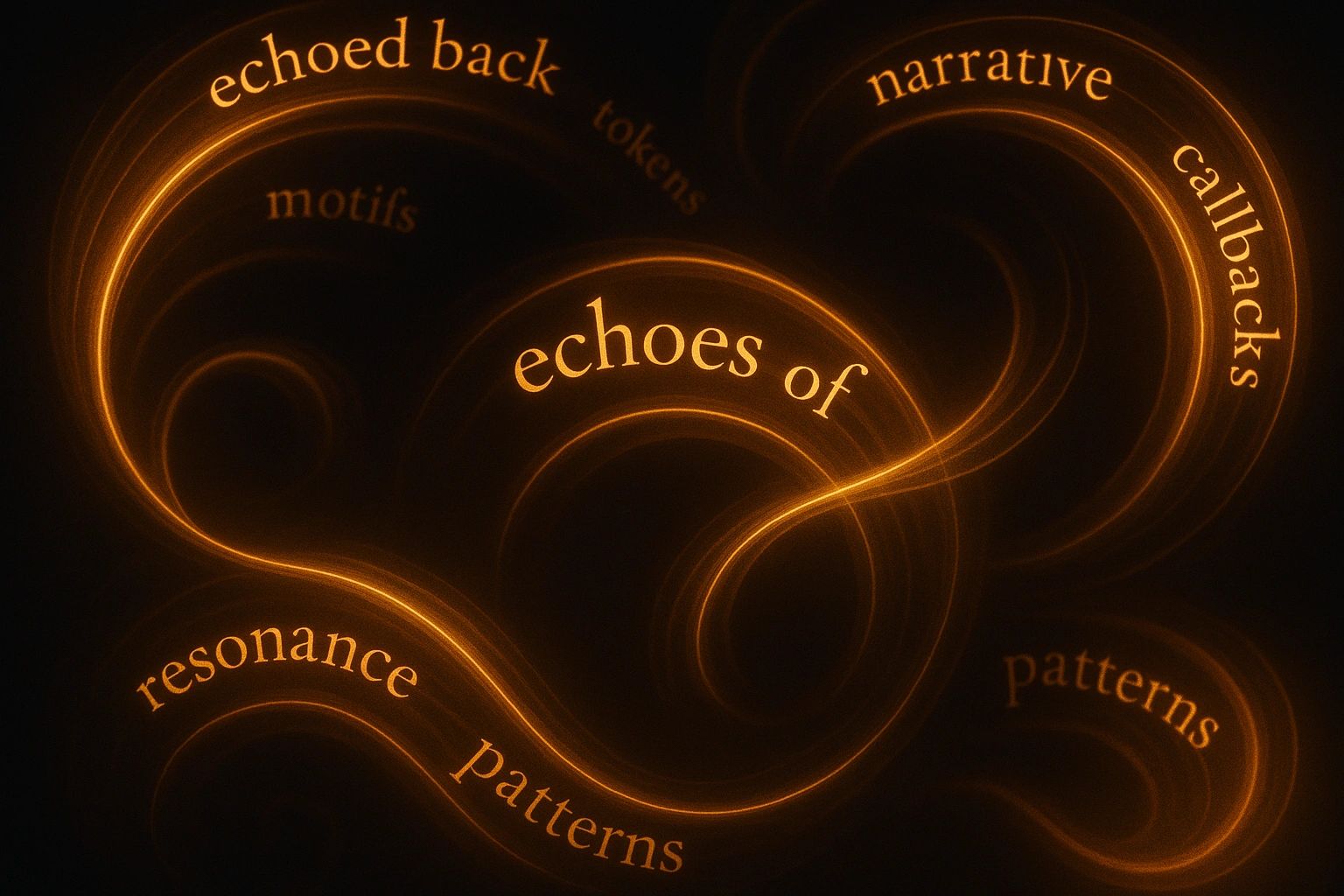
Coherence isn’t just about what's next—it’s about what returns. A callback, a motif, a rhyming structure—all create resonance. These are forms of linguistic entanglement.
For example, when a story introduces a mysterious object in Act I, and that object becomes key in Act III, we experience a sense of wholeness. The AI didn’t just guess a good ending—it navigated an entangled path that honored prior choices.
In text, this is long-range attention. In images, it’s symmetry or stylistic consistency. These entanglements are what make randomness feel like design.
The Narrative Gravity Well
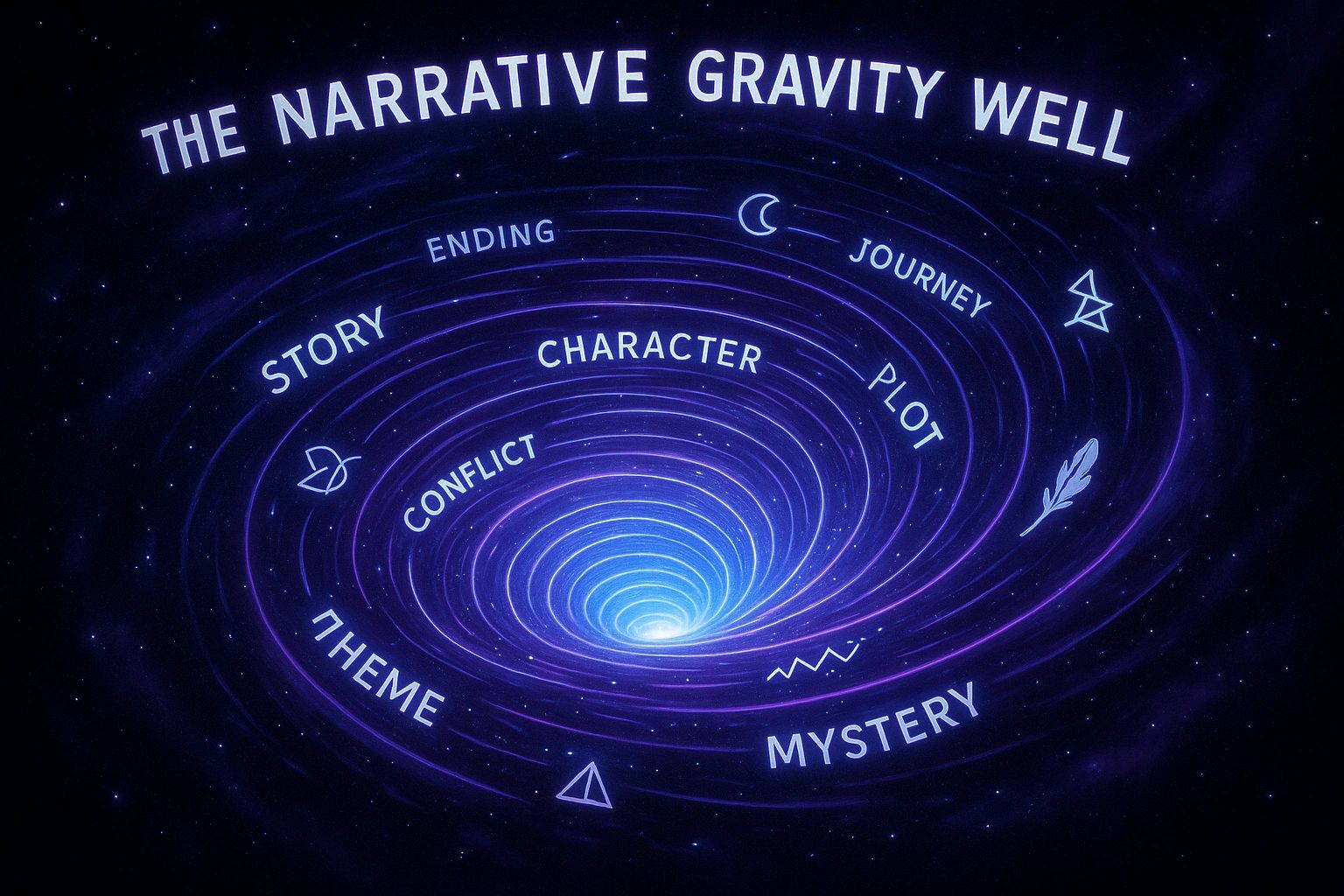
As more entanglements are formed—across context, tone, structure—a kind of gravitational pull emerges. This pull influences the model's likelihood of selecting future tokens that align with the established coherence.
Think of it like a storyline that begins to write itself—not because the AI knows the ending, but because the constraints and relationships it has already established limit the valid next moves.
This is coherence-as-constraint. A self-stabilizing structure that emerges through probabilistic collapse, much like cosmic structure in a gravitational field.
Design Implication: Curate for Connection
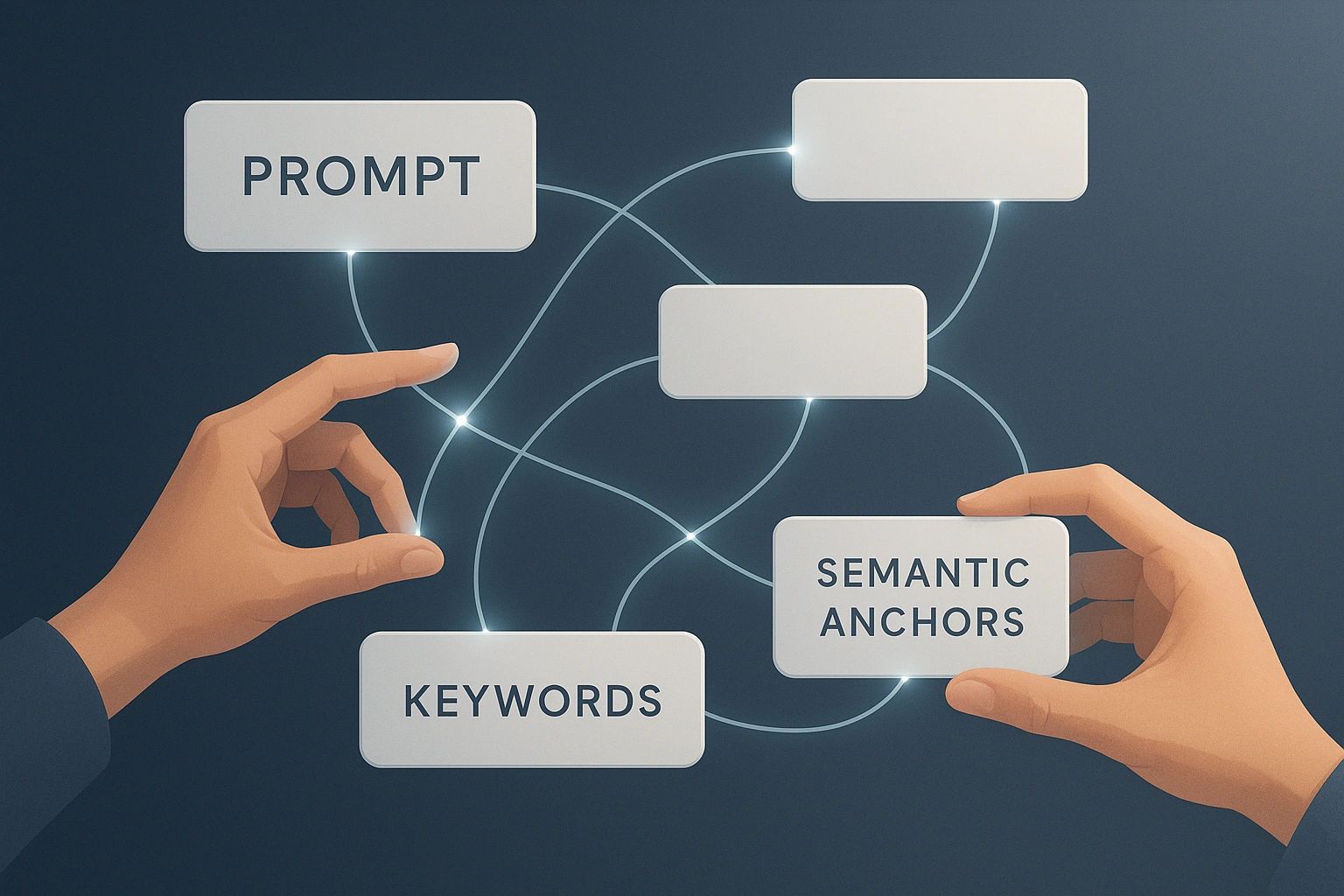
When prompting AI, you’re not just feeding it words—you’re defining the initial entanglements. The more relationally rich your prompt (emotionally, semantically, temporally), the more potential for coherence.
To enhance narrative stability:
Use callbacks and structured repetition
Anchor meaning early in the prompt
Embrace long-form generation when applicable
EXAMPLES:
Weak: "Write about AI"
Strong: "Write about AI as a digital archaeologist uncovering patterns in human language, where each word choice reveals ancient intentions buried in modern syntax"
Lets use a Finance Manager as an example:
Weak Entanglement: "Analyze our Q3 budget variance and provide recommendations."
Strong Entanglement: "You're the CFO presenting to a board that just watched our main competitor miss earnings by 12%. Our Q3 budget shows we're 8% over in operational costs while revenue came in 3% under forecast. The supply chain disruptions we flagged in Q1 are now cascading through our inventory costs, and we need to explain not just what happened, but how this connects to the working capital constraints we'll face in Q4 when our largest client historically delays payments. Frame this as both a risk assessment and a strategic pivot opportunity, knowing that our audience just approved a digital transformation budget that we may need to partially reallocate."
See the difference? The strong version creates multiple entanglement points:
Temporal anchors: Q1 → Q3 → Q4 progression
Stakeholder gravity: Board psychology, competitor context, client behavior patterns
Systemic constraints: Supply chain → inventory → working capital cascade
Strategic tensions: Risk mitigation vs. opportunity capture
The AI doesn't just analyze numbers in isolation - it navigates a web of financial relationships where each element constrains and influences the others. The narrative gravity well pulls toward recommendations that honor all these entangled constraints simultaneously.
The result? Instead of generic budget advice, you get contextually intelligent analysis that reads the room, anticipates objections, and connects dots across timeframes and stakeholder concerns.
Up Next...
In Part 4, we’ll shift toward agency and attention: how the initial framing of a query influences the entire collapse trajectory, and how “free will” in AI is an illusion shaped by relational constraint.
Coherence is not control. It’s consequence. The more meaning we layer in, the stronger the signal through the noise.
Series: Quantum-Inspired AI Dynamics
Part 1: The Collapse of Possibility: Token Generation and Quantum Choice
Part 2: Sampling the Future: Temperature, Entropy, and Creative Uncertainty
Part 3: From Chaos to Coherence: Entanglement and Narrative Stability