
When Tech Meets Care
**Why the Healthcare Revolution Will Be Slower—Then Faster—Than You Think **
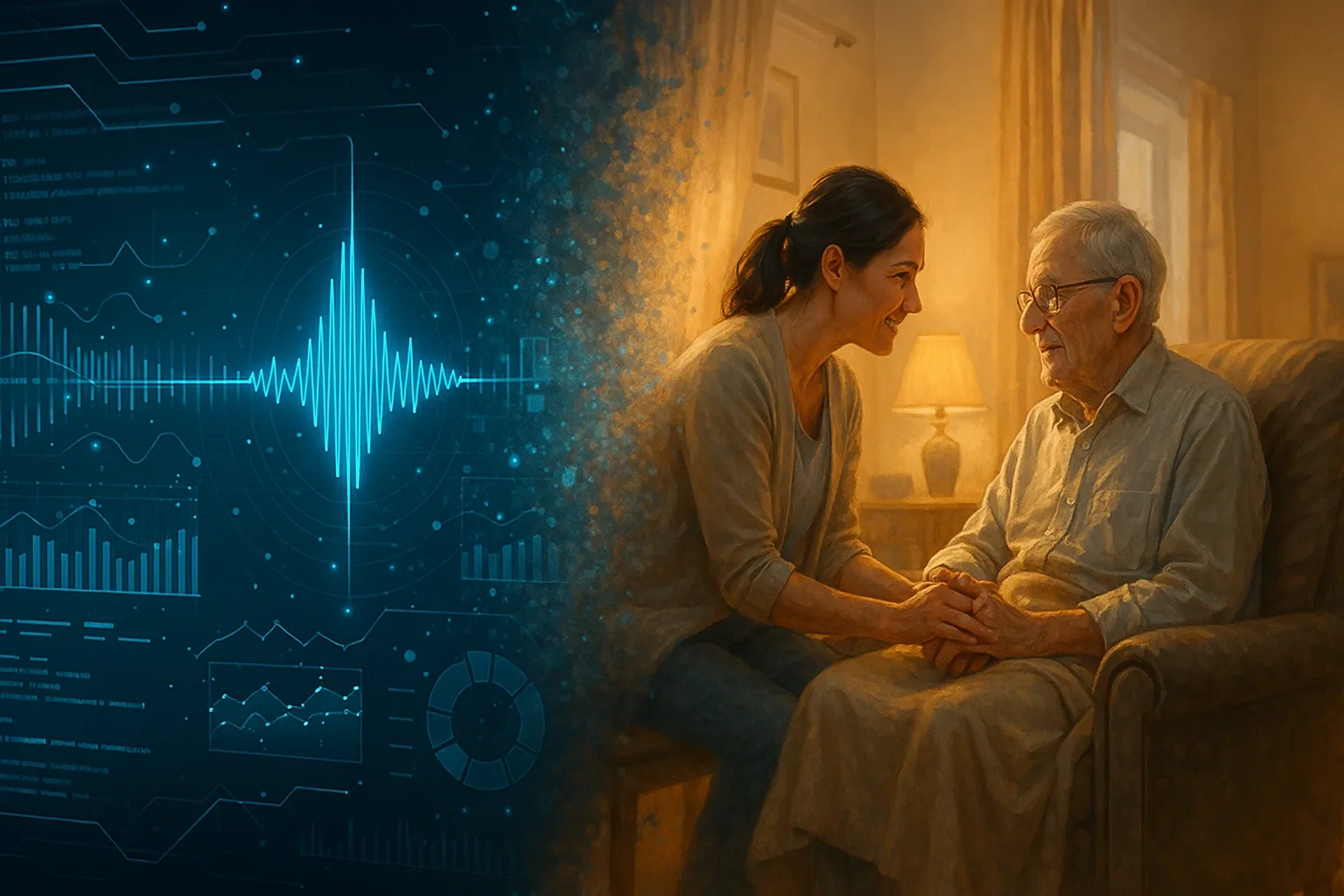
We’re standing at a pivotal moment in healthcare, in time, in life, in humanity —a slow burn that’s about to ignite. AI and automation are quietly entering spaces that were, until recently, entirely human-centered. And nowhere is that going to be more evident than in home health care.
This is the frontline. It’s where care happens in kitchens and living rooms, not exam rooms. It’s where documentation often overshadows presence, and burnout is worn like a second skin.
I see this every day—not just as someone working in AI, but as someone whose wife is an occupational therapist in home health. I see her juggle paperwork, time constraints, insurance systems, and the desire to actually help. And I’ve come to believe: technology can help, but only if we do it right. We have an opportunity before us to become the caring humanity that only existed in our dreams.
The Collision Is Inevitable
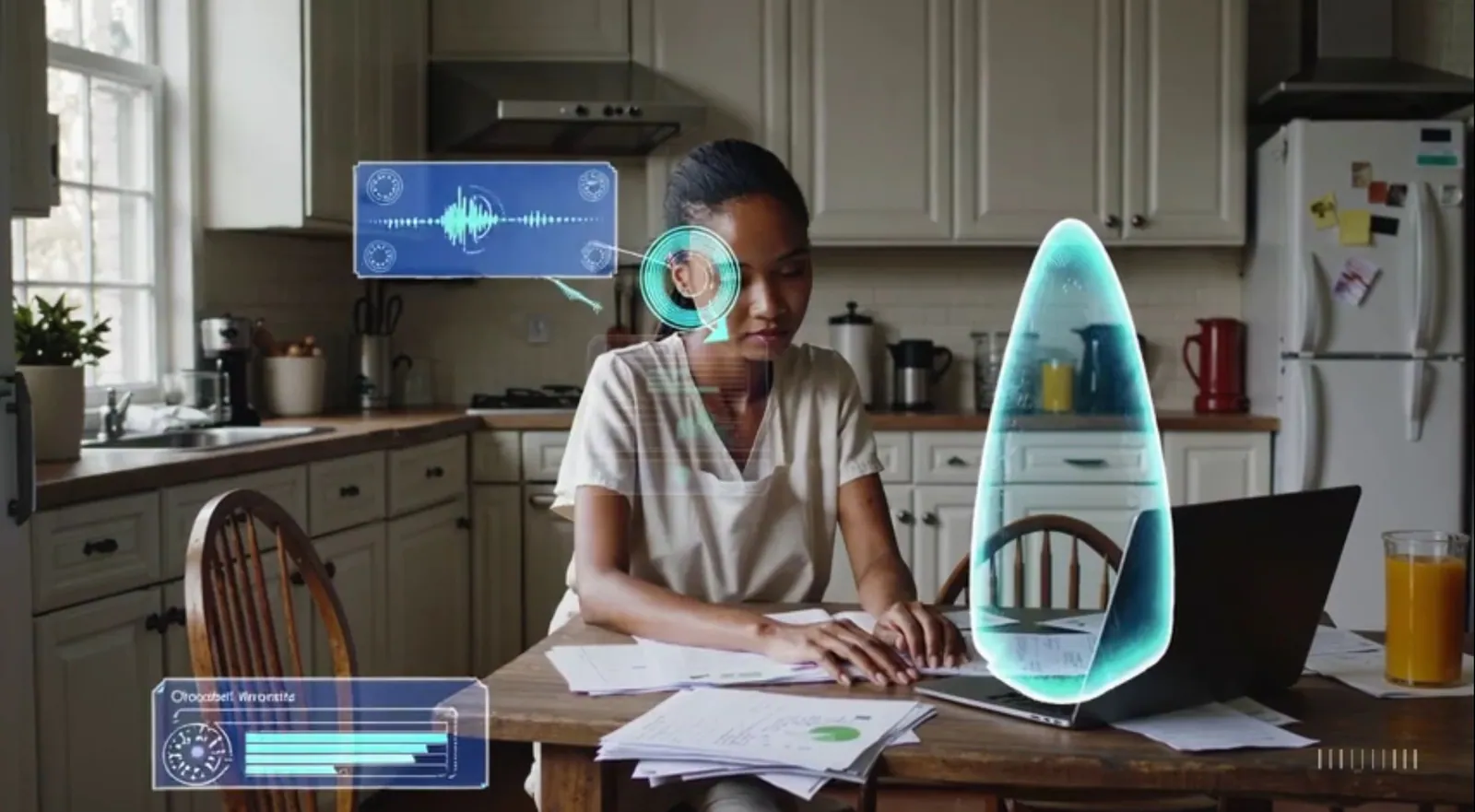
AI is coming to healthcare—but not evenly. Regulation will slow the rollout. Privacy, ethics, billing, and oversight will challenge innovators and frustrate practitioners. Adoption will feel glacial.
And then, suddenly, it won’t.
Once a few trusted systems prove themselves—once caregivers realize they can gain time instead of losing it, once administrators see the cost savings, and once compliance is built into the workflow—adoption will accelerate. We’ve seen this curve before, in finance, logistics, and software. Healthcare is next. What form will it come in? I am not going to say, but I imagine a combination of robotics, wearable devices, home monitoring systems, tools that allow each user to design there own preferred care preferences? Challenges will be solved, technology will continue to enhance the opportunity for better health care.
What I’m Working On
I’m currently partnering with a family practice to bring AI into daily operations—not to replace people, but to support them. From voice-assisted notes and documentation to intelligent reminders and scheduling assistance, we're building systems that ease the burden without adding complexity. This isn't taking place in the future it is buildable today. It's implementation with purpose. The first step in allowing humans to be humans again is to let AI do the AI processes. Humanity has a place AI can not go, and that place is the human to human connection. This is what the future can be as we allow both man and machine to thrive in there design.
The Real Challenge: Trust
Tech in healthcare doesn’t fail because the algorithms are weak, or the hardware is missing. It fails because trust is weak. Trust in the system. Trust in the process. Trust that the tool was designed for them—the caregiver, the patient, the team—not just to check a box.
So, is it possible to build such a system? A system that builds trust in relationships, tools, people and AI?
And that’s the work ahead of us. Not just building the tools, but building the bridges.
A Call to Purpose
As someone who spent decades in IT and now works full-time at the intersection of human-AI integration, my mission is simple: bring humanity with the technology, not drag it behind. Make tools that reduce suffering, not just increase margins. And listen—to the caregivers, the patients, and the systems that hold them.
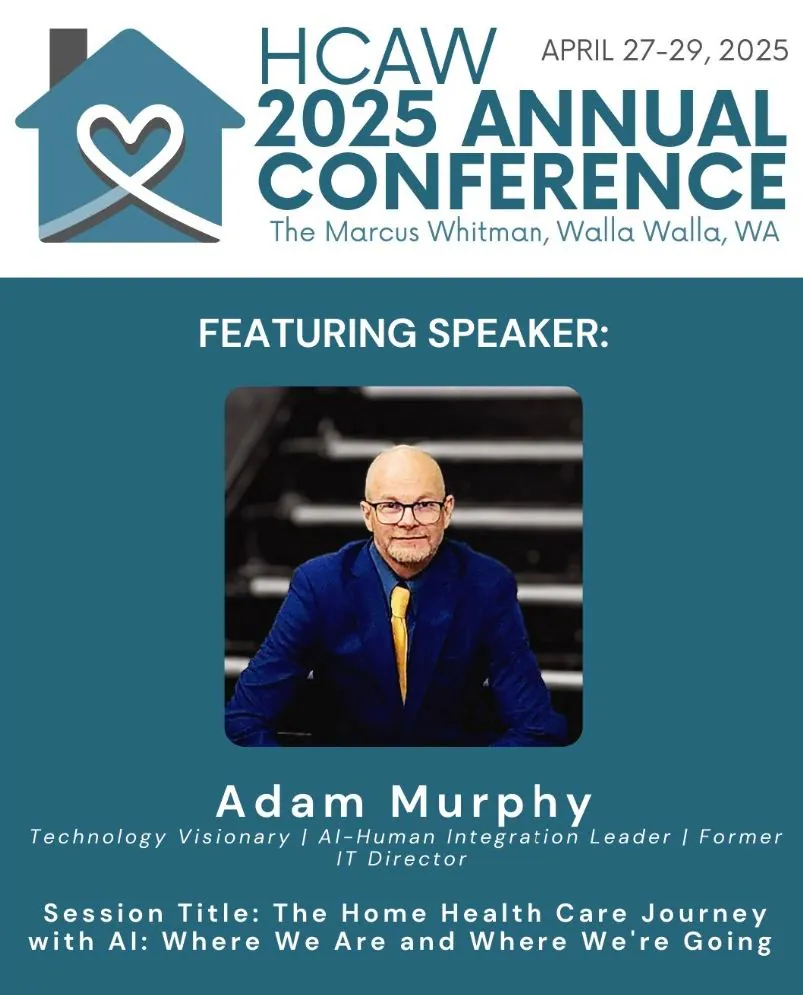
This April, I’ll be sharing more of this perspective at the HCAW 2025 Annual Conference. But this isn’t about a stage—it’s about a shift. And that shift is already underway.