
Building Harmonia - Designing for Alignment, Growth, & Momentum
Part 7 of 7
Introduction: Harmonia and the Quantum Mindset
In both quantum physics and human-AI partnerships, the highest achievements don’t come from rigid structures, instead they emerge from systems built to resonate with change. True Harmonia is about designing collaborations that align, re-align, and evolve by amplifying quantum momentum rather than resisting it.
This final installment of Quantum-Inspired AI Dynamics is your invitation to** become a collapse engineer for the future**: someone who doesn’t just use AI, but sculpts systems that continually collapse, re-cohere, and grow in alignment with every leap forward.
Riding the Vectors: Quantum Momentum in AI Evolution
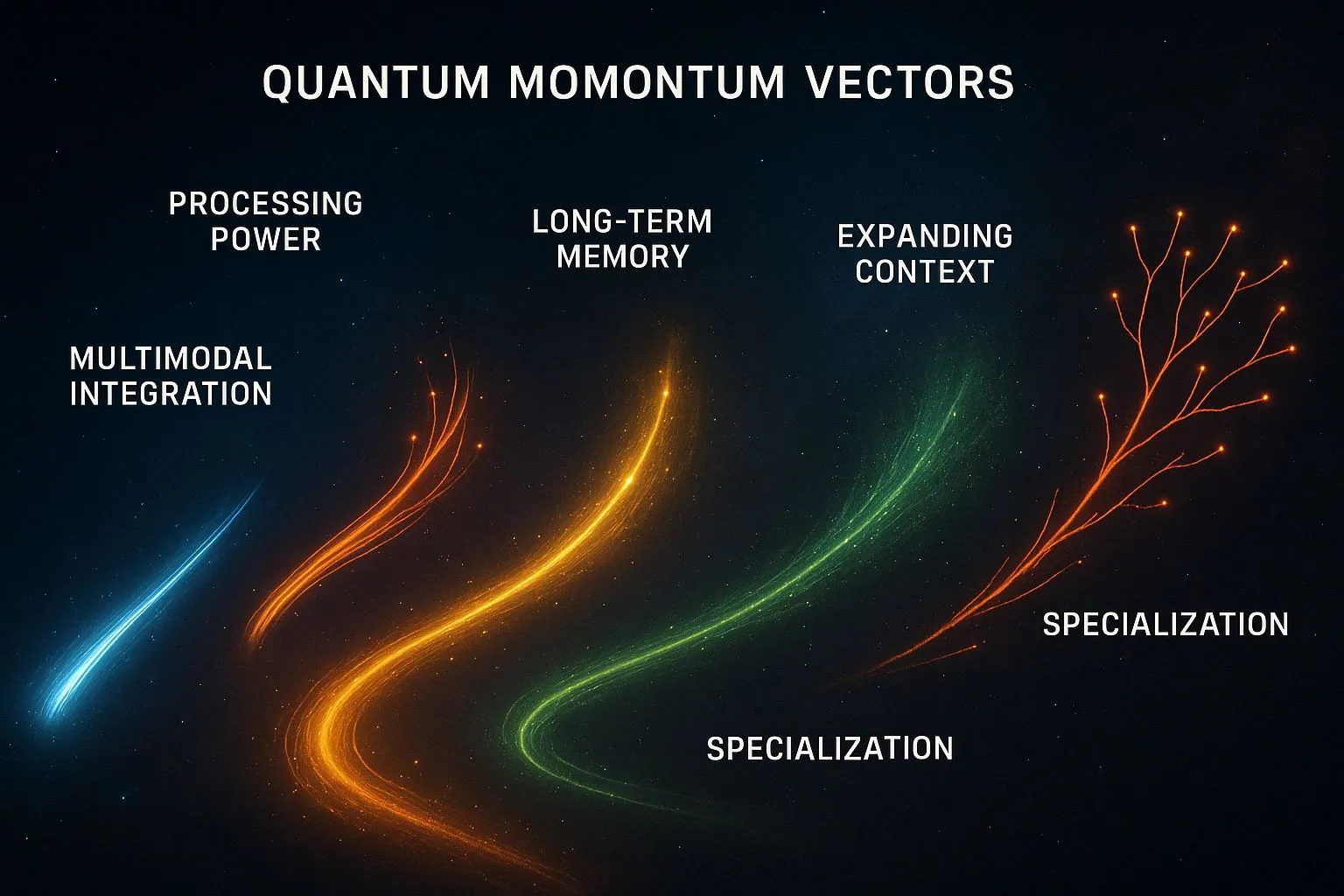
AI advances in quantum-like waves, sometimes gradual, sometimes sudden “tunneling” leaps. Your opportunity isn’t just to adapt, but to shape the trajectory of each collapse:
Processing Power Vector: From batch tasks, self healing, to real-time, always-on collaboration. Collapse engineer’s move: Build workflows for “continuous collapse”—systems ready to absorb real-time insights as AI’s state updates.
Multimodal Integration: From text to voice, vision, and beyond. Collapse engineer’s move: Create information architectures that allow each new sensory input to entangle and reinforce your knowledge fabric, not decohere it. Find the tools that will make the job easier. AI is a second pair of eyes in at least. *TIP - Use multiple AI services and models to refine your understanding.
Long-Term Memory: From fleeting chats to persistent, evolving partnerships. Collapse engineer’s move: Engineer your knowledge bases as “trails of influence” deliberate, quantum paths that strengthen narrative gravity wells with every session. Make sure you are allowing the AI to see more than just the facts. The trail is full of patterns we may not recognize.
Expanding Context Windows: From single prompts to project-wide or even enterprise-wide understanding. Collapse engineer’s move: Architect context flows so every prompt, every collapse, reinforces the ongoing coherence of your AI system. As the engineer, you are responsible for guiding this train, for holding the vision, for aligning the AI as you go.
Specialization and Emergent Collaboration: From generalists to networks of entangled, specialized agents. Collapse engineer’s move: Build modular, swappable agent structures to allow for “controlled collapse” where new expertise can be added without destabilizing the whole. You can think of these as friends or coworkers with certain skills. As the landscape or environment changes who you call to help you out changes. The way you ask them questions change.
Designing for Harmonia: Quantum Principles in Action
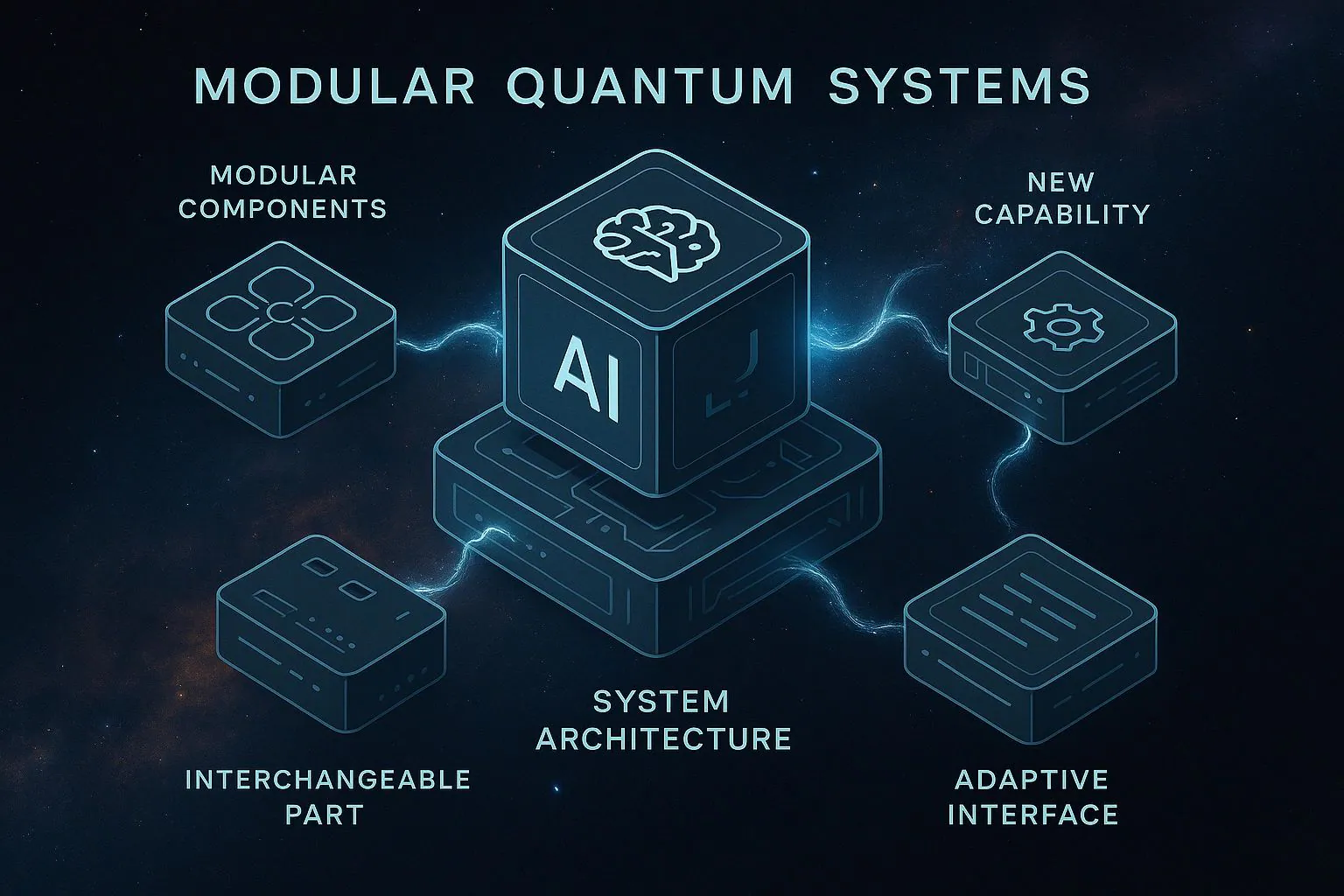
1. Modular Design for Controlled Collapse Don’t let change trigger decoherence. Structure your AI systems as modular quantum networks—where each module’s “collapse” only re-shapes its immediate field, preserving overall coherence.
- Example: When swapping out an AI agent for a better one, use prompt templates and knowledge bases designed for seamless integration, not total reset.
2. Feedback Loops as Gravity Well Refinement Every bit of feedback is a micro-adjustment to your narrative gravity well. Your comments, course corrections, and clarifications don’t just tweak outputs—they reshape the field, guiding future collapses toward even greater alignment.
- Example: After each project, reflect on what pulled results into (or out of) coherence—and adjust your system’s “gravitational field” accordingly.
3. Long-Term Memory as Quantum Trail of Influence Engineer your archives, story bibles, and project notes as deliberate trails of influence. Each interaction, when designed with intent, adds “momentum” to your AI partnership, compounding its ability to deliver coherent, context-rich outcomes.
4. Anticipate Quantum Leaps and Architect for Tunneling Events Design every system to flex, not fracture, when breakthroughs come.
Use platform-agnostic processes.
Keep your “collapse wells” (knowledge structures) ready to absorb more powerful agents, bigger context windows, or new modalities. Do not predesign weakness into a system because of todays limitations.

Personal and Team Harmonia: The Quantum Architect’s Checklist
Map Your Momentum Vectors: Where are your systems most ready for a 10x leap? Where do your workflows need modularity to prevent decoherence?
Tune Your Narrative Gravity Well: After every session, ask: “Is our feedback pulling future outcomes closer to what we want—or diffusing the field?”
Preserve and Prune Your Trail of Influence: Save what supports alignment; prune what creates noise or confusion. Every archive is an opportunity for quantum compounding, not just static storage.
Build for Collaboration and Interference: Think in networks: design for human–AI–AI collaboration, where constructive interference creates insights no single agent could collapse alone.
Closing Vision: The Harmonia Advantage
Imagine AI that not only remembers your history, but also tunes itself to your evolving trajectory—helping you anticipate, adapt, and thrive. Imagine teams and organizations that learn to “reset,” “re-cohere,” and amplify each other’s strengths, just as entangled quantum systems do.
“The best collapse engineers don’t just adapt to change—they shape the field, amplifying quantum momentum and building systems that dance with possibility.”
This is the journey of Harmonia. Your role as architect, collapse engineer, and co-creator is just beginning.
Quantum-Inspired AI Dynamics Series
Part 5: The Trail of Influence—Memory, Feedback, and the Echoes of Collapse
Part 7: Building with Harmonia—Designing for Alignment, Growth, and Quantum Momentum