
Part 4: Agency and Attention—How Prompts Set Collapse
Part 4 of 7
Introduction: You Are the Collapse Engineer
Every outcome in both quantum physics and artificial intelligence begins with an** act of attention**. But here's what most people miss: you're not just observing the collapse or results you see, what you are doing is you're engineering it. Just as a particle's possibilities fold the instant it's measured, the landscape of AI's potential answers reshapes itself the moment your prompt hits the system.
You are the observer. But more than that, you're the architect of constraint, the sculptor of possibility space. The frame you set doesn't just ask a question—it constructs the universe your AI can explore.
This installment of our Quantum-Inspired AI Dynamics series dives into how agency (the choices you make) and attention (where you focus) aren't just inputs to AI—they're the fundamental forces that guide every interaction. Great prompting isn't about asking better questions. It's about becoming fluent in the physics of possibility.

The Fabric of Possibility: Understanding Your Canvas
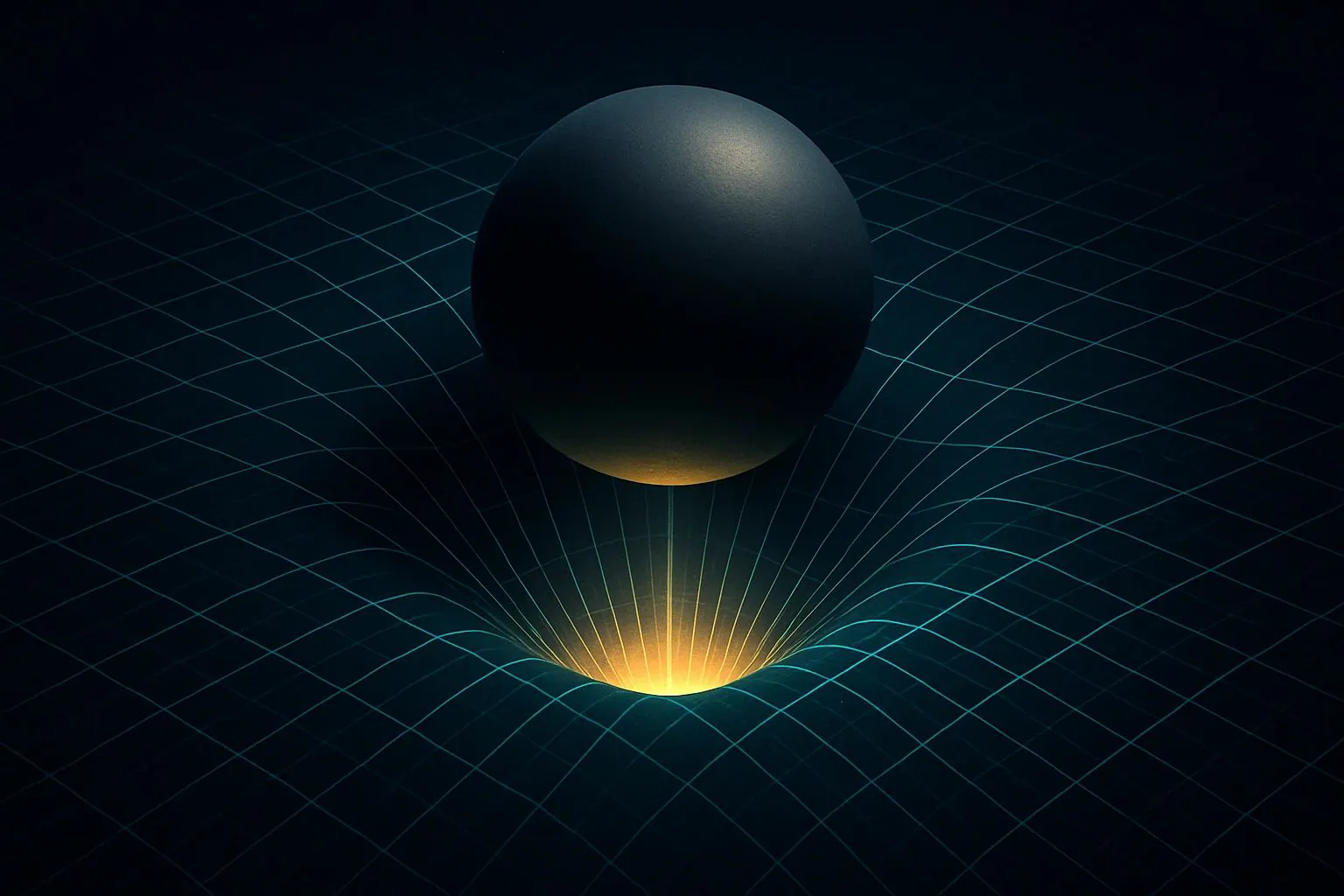
Think of AI's possibility space as a vast, responsive fabric—like a cosmic trampoline stretched across dimensions. Every prompt is a mass you place on this surface, warping reality around your intention.
But here's what I want you to take note of: **the fabric remembers. **
A vague prompt ("Help me with strategy") drops like a feather—barely disturbing the surface, answers scattered across a vast, shallow depression. Your AI becomes a generalist, touching everything, mastering nothing.
A precise prompt ("You're a CFO presenting to a skeptical board after our main competitor just missed earnings by 12%. Our Q3 numbers show we're 8% over in operational costs...") lands like a dense star—creating a deep, focused gravitational well where answers cluster tightly around your specific reality.
Pullquote: “The frame you set doesn’t just ask a question—it constructs the universe your AI can explore.”

Danger Zones: When Physics Breaks Down
Multiple conflicting masses: Drop scattered, unrelated constraints onto the fabric and watch it warp in impossible directions. This is how hallucinations are born—not from AI creativity, but from geometrically impossible instructions.
Contradiction Cascade: "You are a conservative financial advisor and a cryptocurrency evangelist analyzing risk for a non-profit focused on traditional investments." You've just created geometrically impossible constraints. The AI will hallucinate bridges between incompatible realities.
Context Overflow: Dropping too much mass (info) at once doesn't create deeper wells—it creates unstable systems where key details get lost in the noise.
Attention Scatter: Multiple disconnected objectives competing for attention space, like binary stars that tear each other apart rather than forming stable orbits.
The Three Laws of Prompt Physics
Law 1: Constraint Drives Precision
The more specific constraints you establish, the deeper your gravitational well becomes. But specificity isn't about length—it's about relational density. A 500-word prompt full of unconnected details creates multiple weak distortions. A 50-word prompt that establishes clear relationships, stakeholders, and constraints can create a precision instrument.
Example:
“You're presenting our AI implementation plan to a hospital board that just heard their competitor reduced readmission rates by 23% using similar technology. Our pilot showed promise but also revealed three critical workflow challenges that we need to address before full deployment.”
Every element connects: competitive pressure + proven results + specific challenges + implementation context.
Business Example:
“You are a product manager pitching a new feature after a competitor’s high-profile security breach. Our user base is anxious about privacy. Walk through how you would build trust in the first 60 seconds of your pitch.”
Creative Example:
“You’re a novelist building a fantasy world where magic costs the caster a memory. Brainstorm three plot twists that show how this system creates ethical dilemmas for your protagonist.”
Law 2: Sequence Creates Architecture
Your prompts don't exist in isolation—they build on each other like gravitational bodies in a solar system. Each subsequent prompt either strengthens the existing well (constructive interference) or creates competing distortions (destructive interference).
Master practitioners design prompt sequences like architects design buildings: foundation → structure → refinement. Each layer adds constraint without conflict.

Law 3: Ambiguity as Exploration Tool
Sometimes you want shallow wells. When you're exploring unknown territory, intentional ambiguity is a feature, not a bug. The "slider" prompt—with built-in spin and momentum—rolls across the possibility landscape, discovering contours you didn't know existed.
The art: Knowing when to constrain and when to explore.
Advanced Technique: The Collaborative Collapse
Here's what separates novice prompters from systems architects: understanding that you and the AI aren't in a question-answer relationship—you're in a collaborative collapse relationship.
You bring: real-time context, strategic intent, domain expertise, situational awareness AI brings: pattern synthesis, memory consolidation, structural consistency, creative recombination
The magic happens when these capabilities entangle. Your constraints guide the AI's pattern matching toward solutions that honor both logical structure and practical reality.
Healthcare Example:
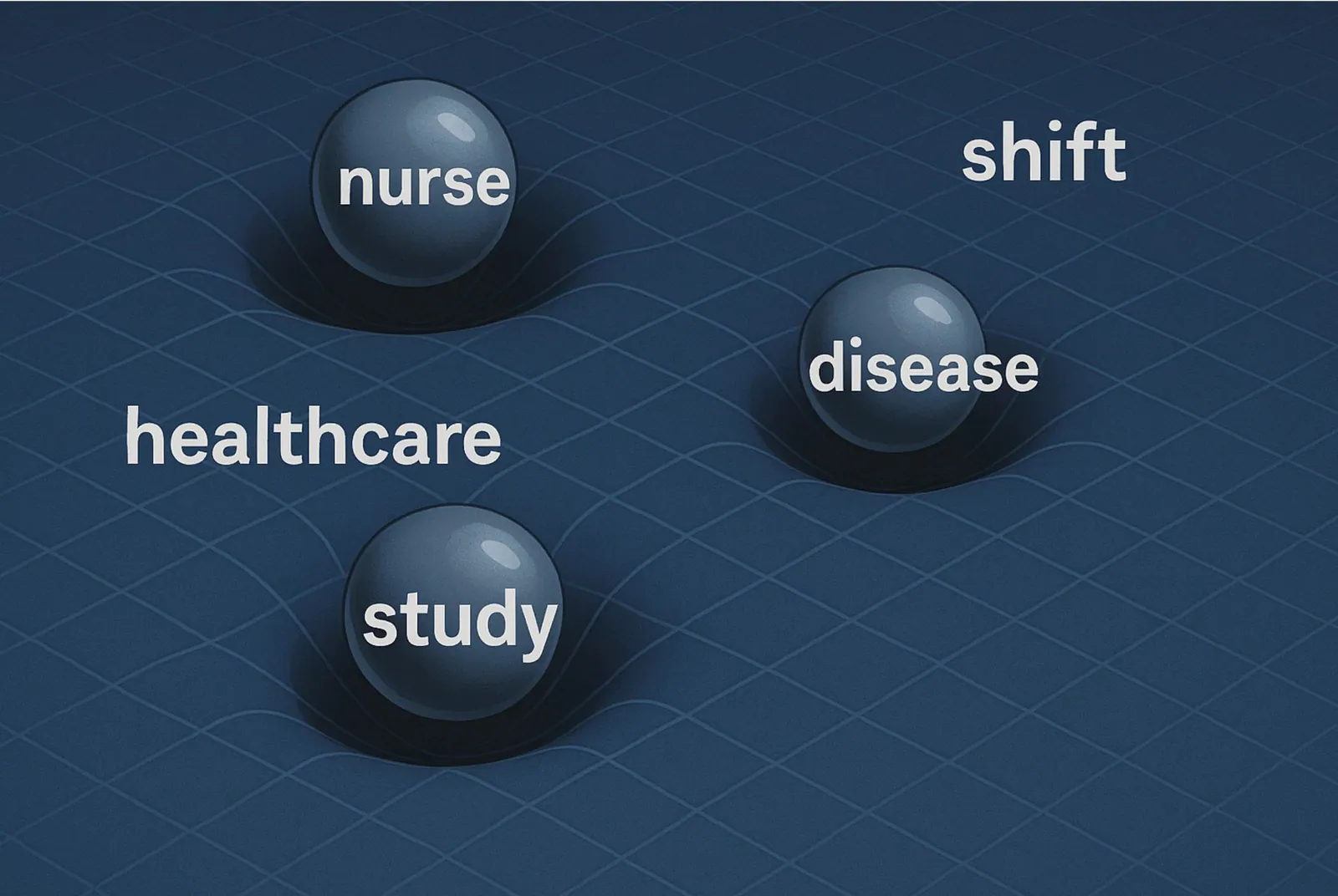
Instead of: "What could cause these symptoms?" Try: "I'm a nurse practitioner seeing a 34-year-old software engineer with chronic fatigue, joint pain, and cognitive fog that started 8 months ago after a viral infection. Standard blood work is normal, but she mentions her symptoms worsen with exertion and improve with rest. Walk me through your differential reasoning, considering both common diagnoses and post-viral syndromes that fit this pattern."
You've created a diagnostic gravity well that pulls toward evidence-based reasoning within specific context.
The Context Window: Memory as Momentum
Your conversation isn't just a series of disconnected prompts—it's an evolving gravitational field. Each exchange adds mass to the system, creating momentum that influences future collapses.
- Early prompts set the fundamental physics of your interaction. Choose them carefully. They become the background gravitational field that shapes everything that follows.
Strategic insight: You can deliberately architect this momentum. Start broad to establish territory, then progressively narrow focus. Or start with a precision strike to establish expertise, then explore variations within that competence.
Design Implications: Becoming a Systems Architect
Start with gravitational design: Before writing your prompt, visualize the well you want to create. Deep and narrow for precision? Broad and exploratory for discovery? Multiple connected wells for complex problem-solving?
Build constraint hierarchies: Establish core constraints first (context, role, objective), then add refinement layers (style, audience, format). Each layer should strengthen, not contradict, the foundation.
Use feedback as course correction: Every AI response shows you the actual shape of the gravitational well you created. Use this intelligence to refine your next prompt.
Master the handoff: When the AI produces something valuable, your next prompt should build on that success rather than starting over. Momentum compounds.
Pullquote: “You’re not just getting answers. You’re designing the conditions under which better answers become inevitable.”
The Professional Edge: AI as Strategic Amplifier
The future doesn't belong to people who can use AI—it belongs to people who can think with AI. Who understand that every prompt is a physics experiment, every response is data about the system, and every conversation is an opportunity to build more sophisticated collaborative intelligence.
You are not just a user. You are a collapse engineer, a possibility architect, a systems designer working at the intersection of human intention and artificial intelligence.
Up Next...
In Part 5, we'll explore how these gravitational fields persist and evolve—how memory, feedback, and the accumulated weight of conversation create learning systems that get smarter over time, and how you can architect AI relationships that compound rather than reset.
The story isn't written in advance. It's engineered, interaction by interaction, through the careful application of constraint and attention.
Series: Quantum-Inspired AI Dynamics