
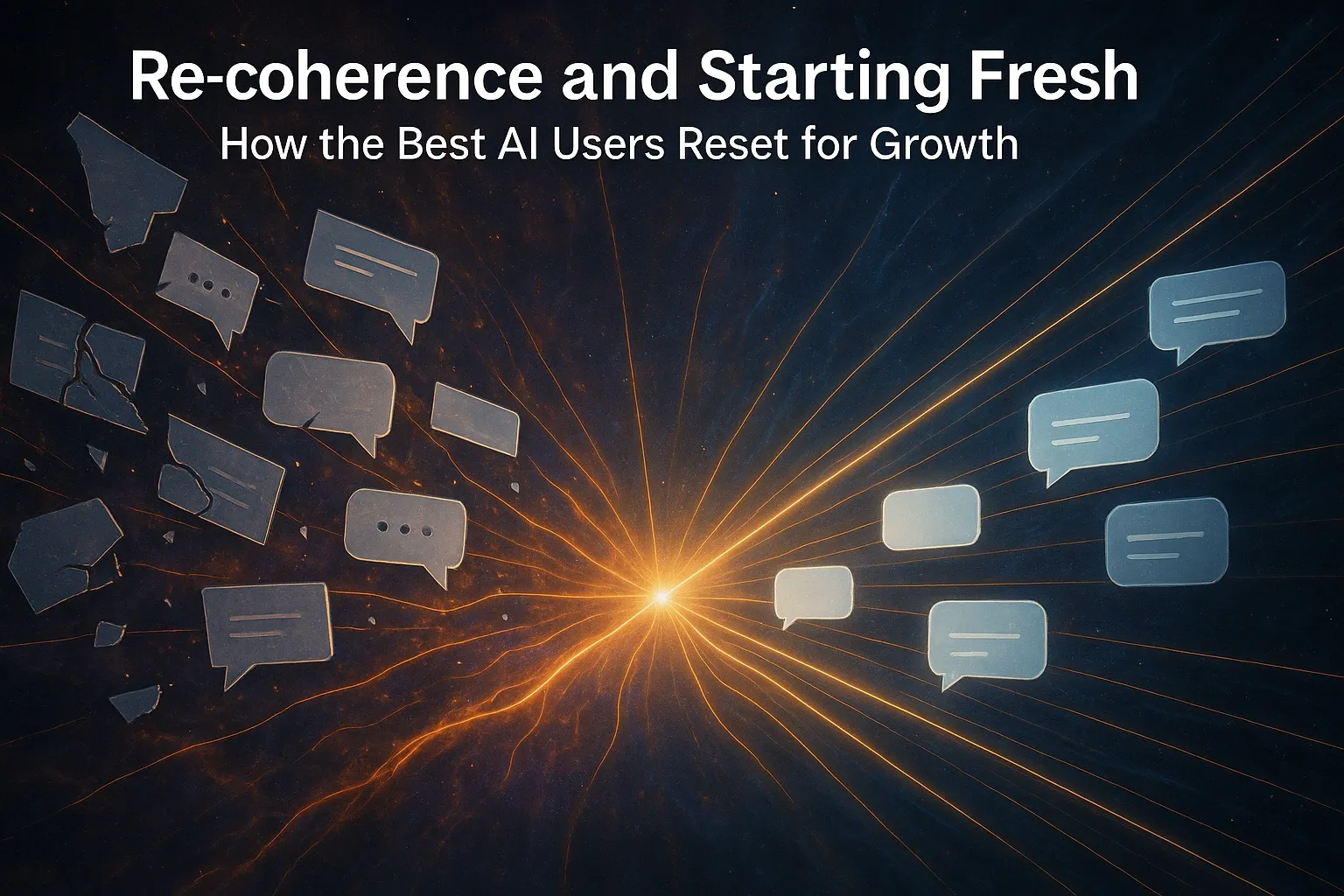
Re-coherence & Starting Fresh - How to Reset AI for Growth
Part 6 of 7
Introduction: Why Every AI Relationship Needs a Reset
Even the best AI collaborations will eventually drift off course. Whether it’s minor repetition, major confusion, or entire projects blending together, decoherence is not failure, it’s simply a normal part of working with any complex system. (This does not make it any less maddening however)
The most effective users aren’t afraid of resets because they know how (and when) to prune away noise, refocus, and come back even sharper. Think of every reset not as starting over, but as an upgrade: taking the best of what you’ve built and moving forward with renewed clarity.
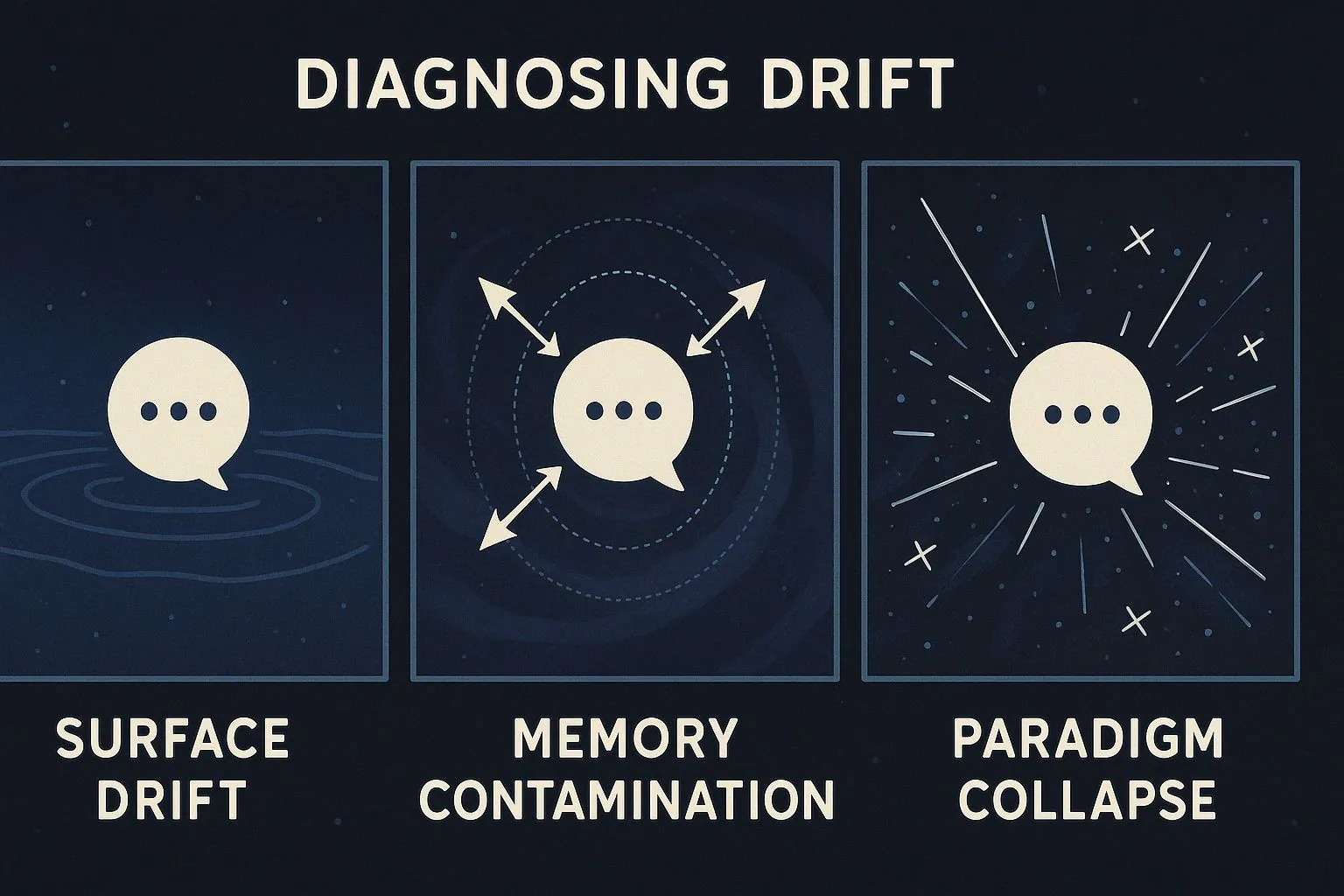
Diagnosing Drift: When to Hit Reset
1. Surface Drift (Simple Fix)
What it looks like: Slightly off answers, minor repetition, gradual topic creep.
Fix: Course-correct with a clarifying prompt. Example: “Let’s refocus on our original goal: analyzing market entry strategies for healthcare AI.”
2. Memory Contamination (Strategic Reset)
What it looks like: Old ideas or instructions keep coming back, new answers get pulled off track by previous conversations.
Fix: Prune or reset the memory. Move important context into a new chat. Example: “Ignore previous merger discussions—let’s focus on clinical protocol development.”
3. Paradigm Collapse (Full Restart)
What it looks like: The AI loses your style or core goals, outputs feel random or contradictory.
Fix: Start fresh. Summarize the key lessons you want to keep, and leave the rest behind. Example: “Summarize our best strategies so far, then let’s restart with only what works.”
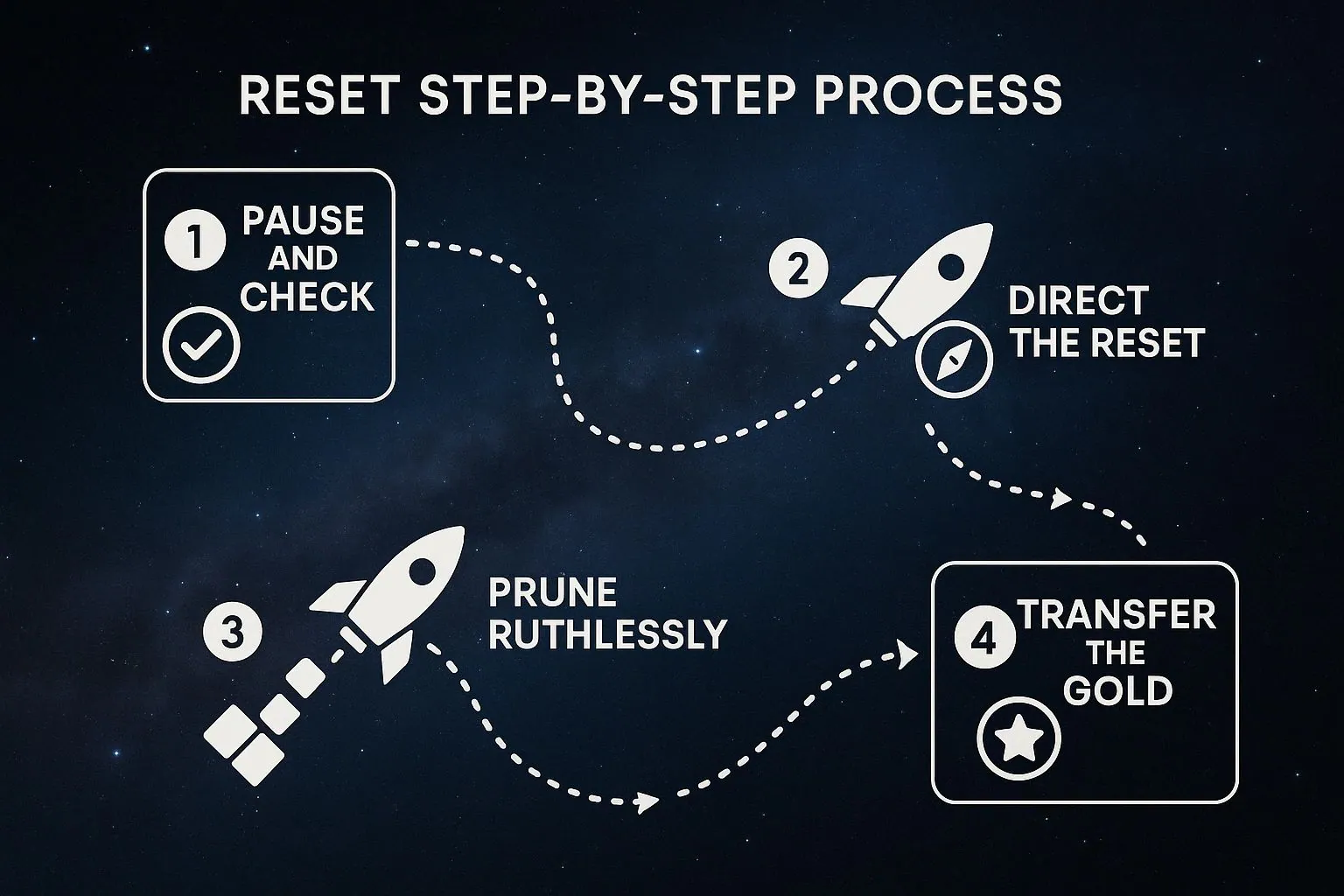
How to Reset and Re-cohere—Step-by-Step
For Everyone:
Pause and Check: Are you still getting what you want? If not, it’s reset time.
Direct the Reset: “Let’s start fresh. Only use the following context: [key details].”
Prune Ruthlessly: Remove details that don’t serve your goal, or say, “Ignore all previous instructions about [X].”
Transfer the Gold: Before you reset, have AI summarize the best insights so you can bring them into the next phase. Pro Tip: “Ask AI for a detailed handoff: ‘Summarize everything a new teammate would need to know to jump in right here.’”
Advanced Moves: Teams and Multi-Project Users
Built-In Reset Points: Schedule regular project phase resets - after discovery, after testing, after review. Example: 'We've completed market research. Summarize key findings before we move to product strategy discussions.'
Separate Contexts: Use distinct chats, files, or folders for different projects or clients. Don’t let experimental work contaminate your “production” space.
Team Alignment: For collaborative AI, keep shared “living docs” updated. When anyone resets, update the group’s source of truth. Even better if you have AI updating for your.
Pro Tip: Build a habit of “post-mortems”—after big resets, take 5 minutes to note what caused the drift and how you can spot it sooner next time.
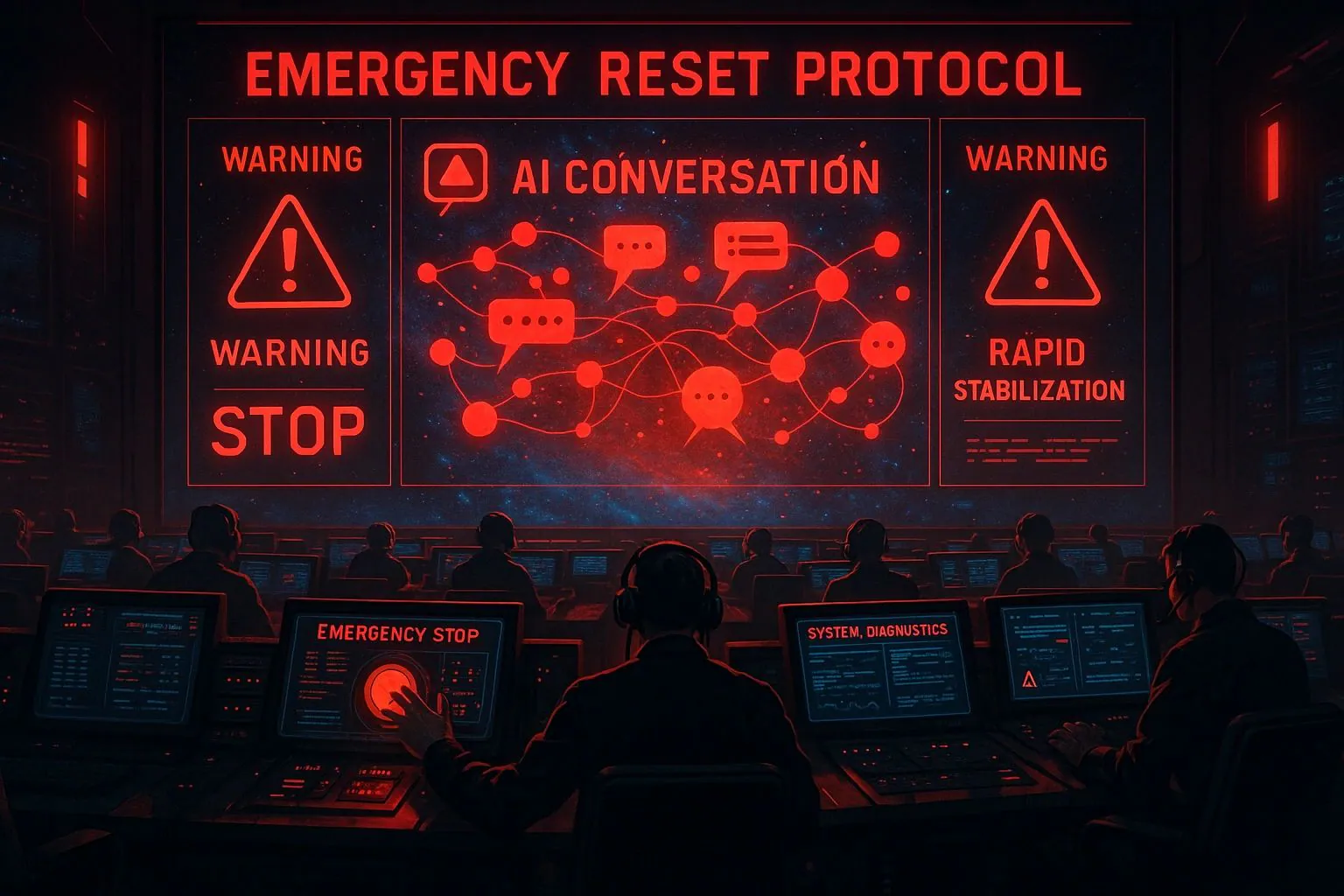
When It’s Urgent: Emergency Reset Protocol
Red Flags: – Answers are way off target, weirdly repetitive, or contradicting earlier work – Old projects keep showing up in new conversations – Output feels random or you “lose the thread”
Immediate Action: – Stop and save any valuable info – Restart in a new session with a clean, clear context – Summarize what’s worth keeping, and leave the rest
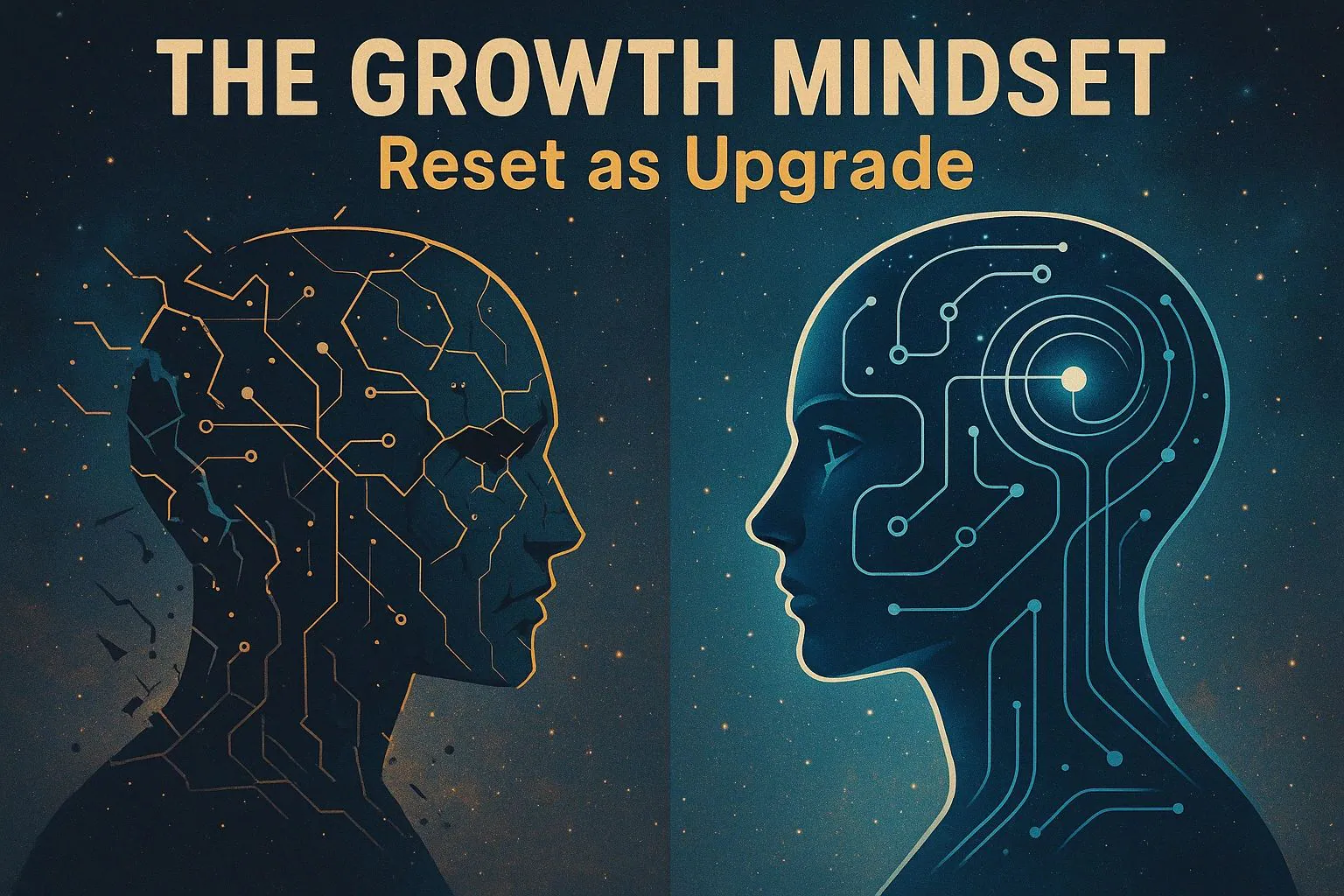
The Growth Mindset: Why Resets Make You Stronger
Every reset is a learning opportunity. Each time you clarify, restart, or prune, your relationship with AI becomes more adaptable, precise, and capable of compound growth. Professionals see resets as a tool for continuous improvement, not a sign of failure.
Bridging to Harmonia: Systems that Learn and Realign
The ultimate goal isn’t avoiding drift—it’s building systems that expect it, and get better at recovering each time. In the final part of this series, we’ll explore how to design AI partnerships that remain aligned, creative, and resilient through every cycle of change.
“Great AI users don’t just keep going—they reset, refine, and grow. Each reset brings you closer to true collaboration and alignment.”